I used to think I was a libertarian.
I started somewhere else. When I was young I was a liberal Democrat. I swung right as I got older. Then I went all the way into the middle and I have not been able to be either, not really, to this day. The closest name I had for that middle was libertarian. Leave people alone. If it is not hurting anyone, why is it the state’s business.
The politics of the city I was in finally wore that idea thin. I could not stand them any longer. I picked up and moved.
Before long, marijuana showed up on my ballot. I put the libertarian hat back on. If it is not hurting anyone, why can’t a person do with their body as they please. I voted for it. Of course I did. It was supposed to be medical, right?
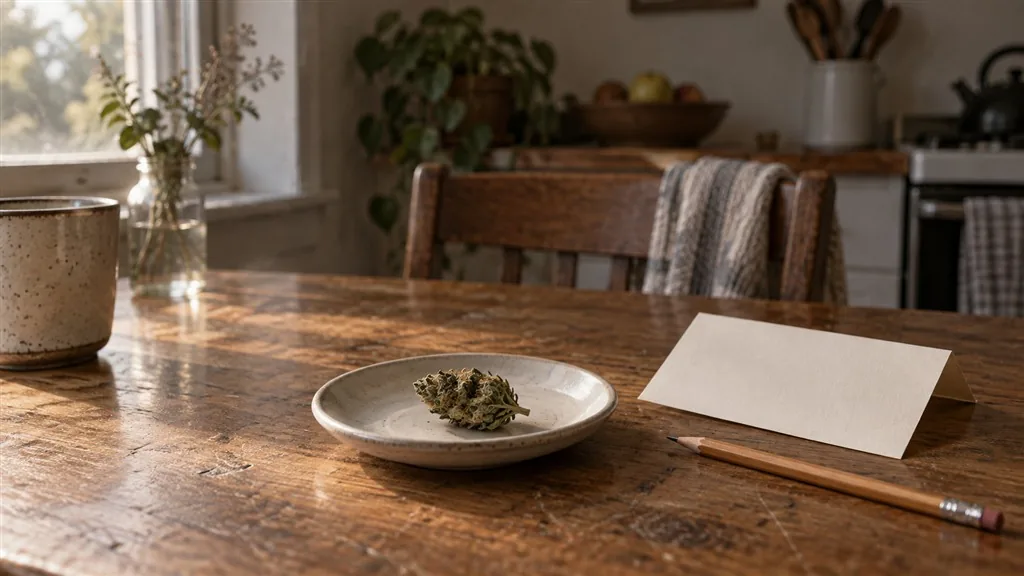
A few years later I began to regret my vote. I will tell you why.
For as long as I can remember, there has been some homelessness. Cities had a skid row. It was mostly alcoholics, or that is how it looked to a kid who did not have better words. I remember it because it is one of the few things that frightened me. Who knows. Maybe I was something like it in a previous life. That is a cheap sentence and I will leave it there. The fear was not cheap. It stayed.
Then, in the early nineties, people started showing up on the freeway off-ramps with signs. The news would follow some of them around the corner and, the story went, they would get into a car nicer than what I was driving. BMW, if you believed the segment. I may be exaggerating a bit. I was not standing there with a clipboard. Some were surely in real trouble. Some were surely working a corner. I do not really know what the truth of that particular circus was. I know what it looked like from the driver’s seat, and I know that looking is not the same as knowing.
Then they started making marijuana legal, and that is when I noticed not just an increase in homelessness but an explosion.
I do not know if that is coincidence. I do not know if it is as related as it appears. I am not going to pretend I ran a study. I am telling you what I saw after I cast a vote I could explain in a single libertarian sentence, and what the street looked like once the sentence had won.
The count, at least, is not only in my head. HUD’s point-in-time count — a one-night snapshot, not a perfect census — put about 550,000 people in shelters or on the street in 2016, the low point in the modern series. In January 2024 the same count hit a record: about 771,000. A year later it was still about 746,000. From 2013 to 2025, HUD says overall homelessness was up 27 percent, unsheltered homelessness up 36 percent, and chronic homelessness up 81 percent. Eighty-one percent is not a vibe. It is an explosion with a number on it.
That does not prove the shops caused the tents. Housing costs, fentanyl, the pandemic, and a dozen other fights belong in the same years. I will not pretend a joint explains all of it. I will also not pretend I did not notice the street changing after the law I voted for.
Here is the part they did not put on the pamphlet. When I voted, we were told it did not harm anyone. The plant they were talking about is not the plant on the shelf. NIDA’s potency monitoring of seized cannabis put average THC at about 4 percent in 1995 and about 16 percent in 2022. Go back to the sixties and seventies and you are looking at something weaker still — often in the low single digits. Shop flower now commonly tests well above that. Concentrates run far higher, into the range where a “hit” is not a joint your cousin passed around in 1978. CBD, the compound that used to ride along, has all but dropped out of the high-THC product. The ratio flipped. It is a different drug with the same nickname.
Does it harm users? For most people who dabble, no, not in the way the old scare films claimed. For daily use of the high-THC stuff, the medical literature is no longer on the campaign’s side. A Lancet Psychiatry study across European cities found that daily use of high-potency cannabis — they used 10 percent THC as the line, which today’s flower often clears — was associated with roughly five times the odds of a first psychotic episode compared with never using. Reviews since then keep finding the same direction: high-concentration THC and psychosis, schizophrenia, and cannabis use disorder. Most users will never have a break with reality. The ones who do are not a rounding error if you are the family, or the cop, or the person in the doorway.
Is that what blew up the homeless count? I cannot honestly say yes. Among people living on the street, severe mental illness and addiction are already common. A drug that is more likely to knock a vulnerable brain off its hinges can knock a vulnerable person off a lease. That is a path, not a proof. Fentanyl and rent will still be in the room if every dispensary closed tomorrow. What I can say is this: I voted on a slogan about a mild plant that wasn’t hurting anyone. The country then scaled a much stronger product, sold it as wellness, and I watched the curb fill up. If potency is only a slice of that, it is a slice we were told did not exist.
Crime is the part I thought would be easy to add, because it seems to have risen. I looked. The FBI series does not give me a clean climb from legalization to lawlessness. Violent crime in this country peaked in the early 1990s and then fell for a generation. Murder jumped in 2020 and 2022, which anyone with a television remembers, and then it fell hard. The Bureau’s 2025 summary puts the murder rate at the lowest in twenty years. Studies that try to isolate recreational legalization and street crime come back mixed, and some find little evidence of a rise in violent or property crime. What did drop, as you would expect, is arrests for marijuana itself.
So I will not hang this essay on a crime wave the national numbers will not support. What I will hang it on is the block. Disorder is not always in the UCR. A man asleep in a doorway does not always become a homicide statistic. He is still there.
Regardless, I have regretted the vote ever since.
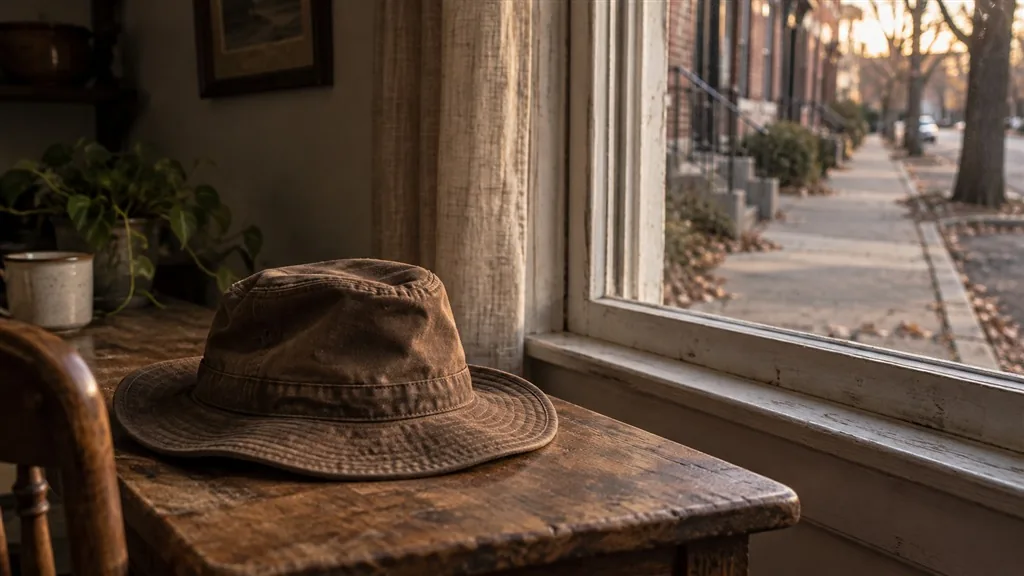
The hat was too simple. “If it is not hurting anyone” sounds clean until you have to say who counts as anyone, and until the harm is not a punch in the face but a curb that slowly fills with people who are not all right. A principle that only works when the outcome is tidy is not a principle. It is a mood.
I am not here to tell you that a joint turns a man into a tent. I did not believe that then and I will not fake the certainty now. I am here to say that I voted as if the body were a private room, and then I watched a public sidewalk become the room nobody wanted to claim. Maybe the two things are strangers that arrived on the same bus. Maybe they are not. The vote is still mine.
Medical was the word that made it easy. Medical is how you get a decent person to relax a law. I wanted to be the decent person. I wanted to be consistent. Consistency is a flattering reason to stop looking.
What I cannot shake is the gap between the off-ramp of the nineties and what came later. The earlier version could still be argued about — real, fake, some of both, a news story with a car in it. The later version did not feel like a segment. It felt like a count. More people. More of the time. Closer to the door. I could still tell myself a story about coincidence. I could not tell myself I had not helped unlock the door.
Libertarian, as I was using it, meant I do not get to run your life. Fine. It did not mean I get to skip the part where a law changes the street I still have to walk down. I wanted the freedom without the picture. I got the picture.
I have not become a man who wants to hunt other people’s pockets for a vice I can ban. I have become a man who does not trust a slogan to do the seeing for him. Leave people alone is a good sentence until you have watched “alone” collect on a curb.
If I had the ballot back, I would not vote on a hat. I would vote on the block.
I voted for the legalization of flower. That is what I thought I was doing — a plant, medical, nobody’s business but yours. Not the concentrates, not whatever they would later put in a cartridge. The flower. Does that make me an accessory to making people homeless, to mental illness, to death? They always said marijuana was a gateway drug. I didn’t believe it. My vote may not have made me an accessory. It sure feels like I am.